
Half of American adults see a dentist every year. Almost none of what happens there reaches research.
Bridge Health Syndicate is building the dental data layer for healthcare.
A founding group of dental organizations is assembling the first linked dental and medical research resource in the United States.
Medical data has transformed how disease is studied, detected, and treated. Dental data was never meaningfully linked to it.
Consider what a dental visit actually is. A clinician images the patient's bone. Examines soft tissue for lesions and inflammation. Records medications, systemic conditions, and pregnancy status. Observes the same patient twice a year, often for a decade, often more consistently than any physician does.
None of it reaches research. The observation is made, recorded, and stranded, and questions that matter clinically go unanswered because the data to answer them sits in silos that were never designed to connect.
Dentistry is one of the largest recurring clinical observation sets in the country, and it is almost entirely absent from the evidence base. Not because the observations are unimportant, but because nothing was ever built to carry them anywhere.
The HELIX™ Protocol closes that gap.
No single dental organization can answer these questions alone.
Research requires scale. A study of oral inflammation and cardiovascular outcomes, or of implant survivorship across patient populations, needs hundreds of thousands of longitudinal records before its findings mean anything. Most dental organizations, including large ones, hold a fraction of that. Their data is clinically rich and statistically small.
Bridge Health Syndicate exists to solve exactly that. A founding group of dental organizations contributes de-identified data from their own patient populations into a single linked research resource. Individually, each contribution is a regional dataset. Together they become a national one, with the geographic, demographic, and clinical range that credible research demands.
The structure matters as much as the scale. The organizations that generate the data govern how it is used. Members set data-use policy, approve the categories of research partner permitted access, and hold protections against competitive misuse of their own contributed data.
Founding members are not joining something that already exists. They are defining it. The standards, the governance, and the research agenda are being set now, by the organizations at the table, and that work happens once.
HELIX is a proprietary, patent-pending method that securely links dental records to medical records at the patient level without ever exposing patient identity.
A patient's complete dental and medical history can be studied together for the first time, while all identifying information remains behind the boundary and never leaves the member's control. This enables rigorous oral-systemic research, real-world evidence generation, outcomes analysis, and AI model development that was previously impossible.
The linkage is one-directional and irreversible by design. The research dataset contains no identifiers and no path back to them. Members retain the only relationship to their own patients.
Nothing of this kind exists in dentistry today. HELIX is the reason it now can.
Clinical and administrative records stay in the member's own environment. Read-only connection. Identity never leaves.
Dental and medical records are matched at the patient level behind the boundary. The linkage is one-directional and irreversible.
No identifiers and no path back to them. Released by approved category of use, under member-set policy.
These are not hypothetical applications. They are questions researchers have wanted to ask for decades and have never had the data to answer.
Oral-systemic research
Diabetes, cardiovascular disease, adverse pregnancy outcomes, and autoimmune conditions all present in the mouth. Linked data lets researchers study those relationships at population scale instead of small single-site cohorts.
Earlier signal detection
Routine dental radiographs contain information about systemic conditions that is never analyzed. Linked outcomes data makes it possible to validate what those images can reveal.
Real-world evidence
Implants, aligners, restorative materials, and oral-care therapeutics are deployed at enormous scale with limited longitudinal follow-up. Linked records support post-market surveillance and outcomes analysis.
Model development
Research-grade linked datasets are the input dental AI has been missing.
Access and utilization research
Dentistry is often a population's only point of contact with the health system. Linked data supports study of how that contact relates to downstream utilization, cost, and outcomes.
Bridge Health Syndicate produces de-identified research signals and case-finding outputs. The platform does not diagnose.
Most healthcare datasets fail on quality long before they fail on scale.
Bridge Health Syndicate is built to a research standard from the point of contribution, because a resource that cannot withstand peer review is not worth assembling.
Structured at the source
Data is drawn directly from member practice management systems rather than reconstructed from claims, preserving clinical detail that billing records discard.
Longitudinal by nature
Dental recall brings the same patient back on a predictable cadence, producing observation intervals most clinical datasets cannot match.
Documented and versioned
Every dataset released carries its schema version, its de-identification version, and its provenance.
Reviewed before release
Research use is approved against member-set policy. Access is granted by category of use and party, not by open licensing.
De-identification is performed under the Expert Determination standard of the HIPAA Privacy Rule.
- Member organizations connect through read-only integrations under executed business associate agreements. No workflow changes, no new software, no patient-facing burden.
- The syndicate is member-governed. Members set data-use policy, approve categories of research partner, and hold protections against competitive misuse of their own contributed data.
- Bridge Health Syndicate does not sell identifiable data. Re-identification is prohibited contractually for every party receiving a dataset.
- The connection is read-only. Nothing is written back to a member's practice management system.
- Identity never crosses the boundary.
- Competitive protection is contractual, not promised. No member can obtain a dataset that isolates another member's practices, providers, or performance.
- Independent review. The de-identification methodology is subject to independent expert determination, and the governing agreements were built with outside healthcare regulatory counsel.
Five steps, from application to participation.
-
01
Apply
A short form. Every application is reviewed personally.
-
02
Introductory conversation
Walk through the protocol, the governing agreements, and the terms of participation, with questions from counsel and technical teams welcomed.
-
03
Agreements
A business associate agreement and membership documents, prepared by healthcare regulatory counsel, available for the member's own counsel to review before signing.
-
04
Connection
A read-only connector to the existing practice management system, typically installed in about two weeks.
-
05
Participation
Governance participation from day one, including a voice in data-use policy and approved research-partner categories.
Membership is open by application to dental groups and multi-location practices.
Members contribute through a read-only connection to their existing practice management system, typically installed in about two weeks by their own IT provider or ours. Members participate in governance from the first day and share in the value the network generates through its research partnerships.
A founding group of organizations is establishing the network now. Founding members set the governance framework and the data standards that every organization joining later inherits.
There is no fee to join and no capital contribution. The terms of participation, including how members share in what the network's research partnerships generate, are covered in full in the introductory conversation.
Apply to joinA research resource that exists nowhere else.
Dentistry produces something no other specialty does. A structured clinical record on the same patient roughly every six months, sustained across years, on a population that is largely healthy at the point of observation and therefore invisible to the rest of the health system. Linked to medical outcomes, that becomes a longitudinal resource with a cadence and a denominator that claims extracts and hospital records cannot reproduce at any price.
Device and materials manufacturers
Post-market surveillance and survivorship analysis on implants, aligners, and restoratives placed at scale and followed almost not at all.
Diagnostics developers
Outcome-linked validation of what routine dental imaging can reveal about systemic disease.
Life sciences and outcomes teams
Oral-systemic questions studied at population scale rather than single-site cohorts.
AI developers
Research-grade linked training data not previously available in this field.
Access is by approved category of research use, under agreements that prohibit re-identification and restrict onward disclosure.
Contact the research team → dra@bhsyndicate.comQuestions from operators, counsel, and IT.
No. The connection is read-only and runs in the background. No new software, no change to charting or scheduling, nothing patient-facing.
De-identified clinical and administrative data. Identifying information stays inside the member's environment.
De-identification under the Expert Determination standard of the HIPAA Privacy Rule. Re-identification is contractually prohibited for every party receiving a dataset.
Members connect under executed business associate agreements. The governing agreements and de-identification framework were developed with outside healthcare regulatory counsel; a member's own counsel may review every document before signing.
No. Contributed data is not disclosed to other members, and no dataset can isolate another member's practices, providers, or performance.
No fee to join, no capital contribution.
Typically about two weeks.
The major dental PMS platforms. Applicants specify their system on the form for confirmation.
Members, through governance, from their first day.
Answer pending legal review.
Answer pending legal review.
No. The platform produces de-identified research signals and case-finding outputs. It does not diagnose and is not used in the care of an individual patient.
The people accountable for how this is built.
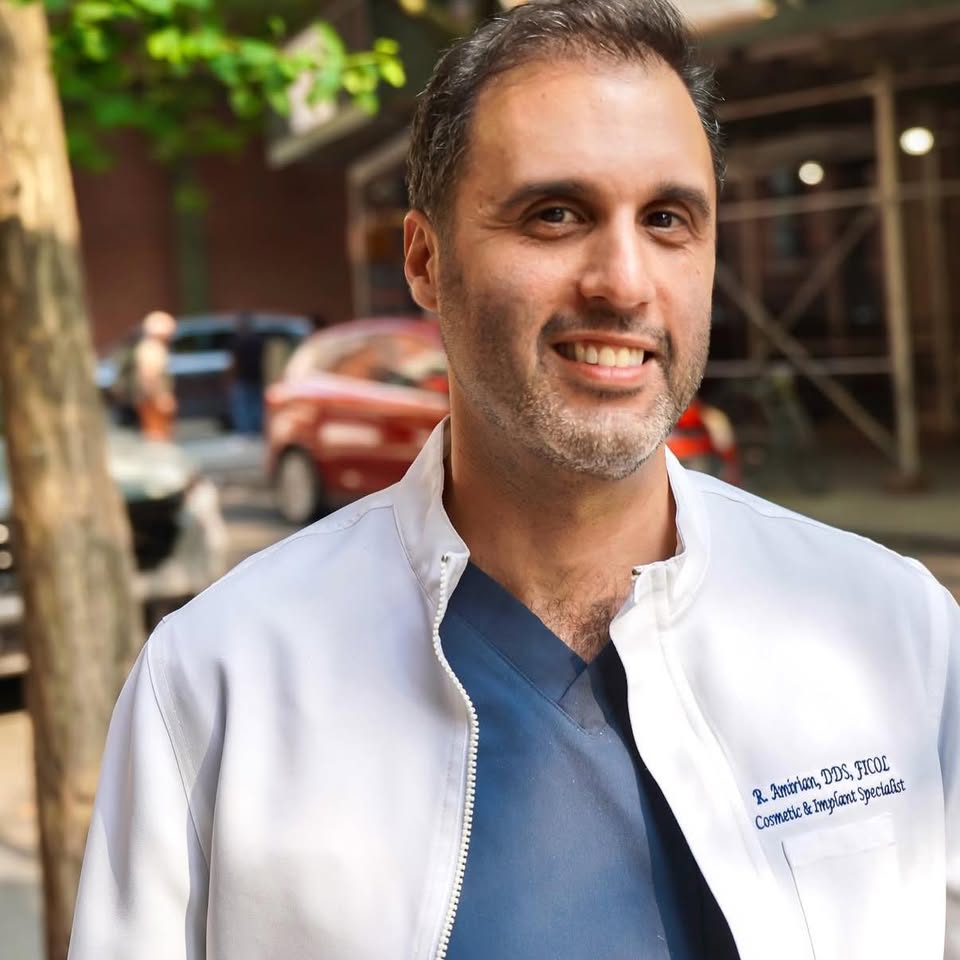
Rabiel is a practicing dentist in New York City who has spent his career watching the mouth reveal signs of systemic disease before a diagnosis is made. He founded Bridge Health Syndicate to link the dental record to the medical record at scale, de-identified, so those signals reach research and patient care — and so the practices that generate the data share in its value.

David brings more than 15 years of cybersecurity and networking expertise to Bridge Health Syndicate, including deep work in software-defined perimeter architecture. He has held leading roles in product management and product development throughout that career, and applies that same rigor to the technical architecture behind the HELIX Protocol.
Apply to join the syndicate.
Every application is reviewed personally. We follow up to schedule an introductory conversation covering the protocol, the governing agreements, and the terms of participation.
We review every submission personally and will follow up within two business days to schedule an introductory conversation.